
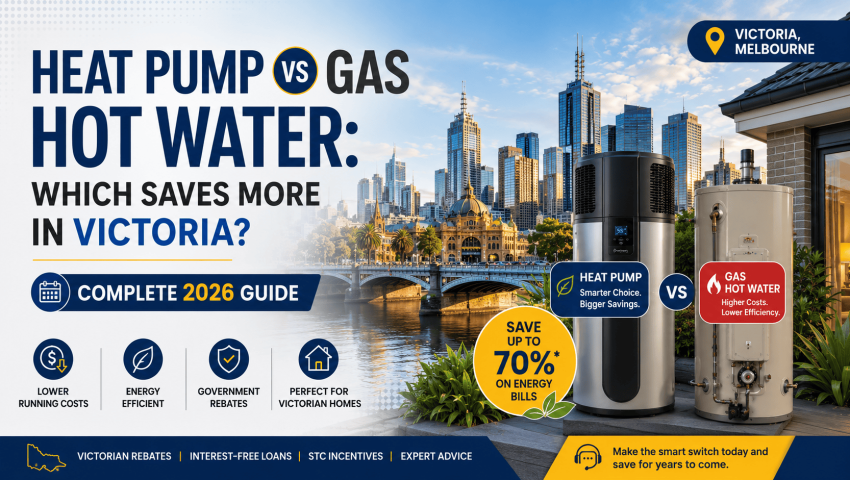
Heat Pump vs Gas Hot Water: Which Saves More in Victoria?
 By System Admin
- VEU
- Aug 06, 2026
- 14 minutes read
- 22 Views
Heat Pump vs Gas Hot Water: Which Saves More in Victoria? | Complete 2026 Guide
Heat Pump vs Gas Hot Water: Which Saves More in Victoria?
For many Victorian homeowners, the hot water system is one of those appliances that rarely gets much attention—until it stops working.
When that happens, the first question is usually, "Should I replace it with another gas system or upgrade to a heat pump?"
It's a fair question.
Hot water accounts for a significant portion of household energy use, making it one of the biggest contributors to ongoing utility costs. Choosing the right replacement isn't just about today's purchase price; it's about how efficiently the system performs over the next 10–15 years, how much energy it consumes, how well it suits your household, and whether government-supported programs can help reduce the upfront cost.
Across Victoria, more homeowners and businesses are considering heat pump hot water systems as they replace ageing gas or electric storage units. Rising energy awareness, advances in heat pump technology, and the Victorian Energy Upgrades (VEU) Program have all contributed to this shift toward more efficient hot water solutions.
In this guide, we'll compare both systems in practical terms—covering efficiency, operating costs, performance, environmental impact, and long-term value—so you can make an informed choice.
Why Your Hot Water System Matters
When people think about reducing their electricity or gas bills, they often focus on solar panels, heating and cooling, or switching energy providers.
Hot water is often overlooked.
Yet for many households, it represents one of the largest ongoing energy expenses because it operates every day, regardless of the season.
Whether you're taking morning showers, washing dishes, running the washing machine, or cleaning up after dinner, your hot water system is working behind the scenes.
An inefficient system doesn't just use more energy—it can also lead to higher running costs year after year.
That's why replacing an ageing hot water system is often one of the first upgrades considered under broader home energy improvement plans.
Understanding the Difference
Although both systems provide hot water, they work in completely different ways.
How a Gas Hot Water System Works
Gas hot water systems produce heat by burning natural gas or LPG. The burner heats water either inside a storage tank or as it flows through a continuous-flow unit.
- Heat water quickly
- Deliver reliable hot water
- Have been widely available throughout Victoria
- Are familiar to many households
For years, they were considered one of the most practical alternatives to electric storage systems. However, energy technology has evolved considerably, and homeowners now have access to more efficient options.
How a Heat Pump Works
A heat pump doesn't create heat by burning fuel. Instead, it captures heat from the surrounding air and transfers that energy into the water stored inside the tank.
Many people compare this process to a refrigerator operating in reverse. Rather than removing heat from inside a fridge, a heat pump extracts warmth from the outside air and uses it to heat water.
Because it moves existing heat instead of generating it directly, a heat pump typically requires much less electricity than a conventional electric storage hot water system.
This is one of the reasons heat pump technology has become an important focus within Victoria's broader energy-efficiency initiatives. The Samsun Energy VEU documentation highlights lower energy usage, improved efficiency, reliable hot water, and reduced running costs as key benefits of modern heat pump systems.
Efficiency: Where Heat Pumps Stand Out
When comparing hot water systems, efficiency is often the biggest differentiator.
A traditional gas system generates heat through combustion. A heat pump transfers naturally occurring heat from the air. That difference in technology changes how much energy is required to produce the same amount of hot water.
In practical terms, many households find that modern heat pumps consume significantly less energy than older electric storage systems and can also offer advantages over ageing gas systems, depending on household usage patterns, energy tariffs, and installation conditions.
This is one of the main reasons energy-efficient hot water systems are increasingly being adopted across Victoria.
Heat Pump vs Gas: Feature Comparison
| Feature | Heat Pump | Gas Hot Water |
|---|---|---|
| Energy Source | Electricity + ambient air | Natural gas or LPG |
| Energy Efficiency | High | Moderate |
| Greenhouse Emissions | Lower when paired with cleaner electricity | Higher due to combustion |
| Smart Controls | Available on many models | Limited |
| Renewable Energy Compatibility | Excellent with rooftop solar | Limited |
| Future Electrification | Supports all-electric homes | Depends on ongoing gas infrastructure |
The right choice depends on your property, household size, existing services, and long-term energy goals.
Running Costs: Beyond the Purchase Price
One of the biggest mistakes homeowners make is comparing only the purchase price of a hot water system.
A hot water system is a long-term investment. If it operates every day for the next decade or more, its ongoing energy consumption will often have a greater financial impact than the initial installation cost.
Imagine two neighbours replacing ageing hot water systems.
Home A – Chooses a replacement gas system because it's familiar.
Home B – Chooses a modern heat pump after reviewing available energy-efficient options.
Both households receive reliable hot water. The difference becomes noticeable over time. Because the heat pump uses energy differently, it may require less energy to provide the same amount of hot water, particularly when correctly sized and installed for the property.
Actual savings will always vary depending on:
- Household size
- Water usage
- Climate
- Energy tariffs
- Existing infrastructure
- Hot water demand
Rather than focusing only on today's price, many Victorian homeowners now consider total lifetime value.
Heat Pumps and Solar: A Strong Combination
One of the biggest advantages of a heat pump is how well it complements rooftop solar.
Homes with solar panels often generate electricity during daylight hours. A heat pump can be scheduled to operate during these periods, making better use of the electricity being produced on-site.
Instead of exporting surplus solar energy to the grid, households may be able to use more of that energy to heat water. This creates a more integrated energy-efficient home.
For homeowners already planning solar, battery storage, or EV charging, a heat pump often becomes part of a broader electrification strategy rather than a standalone appliance.
Environmental Impact
Victoria continues to move toward lower-emission technologies across homes and businesses. Replacing older, inefficient equipment with modern energy-efficient alternatives contributes to that transition.
Heat pumps support this objective because they:
- Use energy more efficiently
- Reduce unnecessary energy consumption
- Help lower greenhouse gas emissions
- Support long-term electrification
These broader environmental benefits are consistent with the objectives of the Victorian Energy Upgrades Program, which encourages the adoption of approved energy-efficient technologies across residential and commercial properties.
Why More Victorians Are Choosing Heat Pumps
Conversations around hot water have changed over the past few years. Previously, homeowners often asked: "Which gas system should I buy?" Today, the question is increasingly: "Should I replace my gas system with a heat pump?"
Several factors are driving this shift:
- Better awareness of energy efficiency
- More modern heat pump technology
- Interest in reducing ongoing energy use
- Growing adoption of rooftop solar
- Government-supported energy-efficiency initiatives
- Long-term sustainability goals
For many households, upgrading isn't just about replacing an old appliance—it's about improving the overall energy performance of the home.
How Samsun Energy Helps You Upgrade with Confidence
Choosing the right hot water system isn't always straightforward. Every property is different, and selecting the wrong system can affect comfort, efficiency, and long-term operating costs.
That's why Samsun Energy takes a personalised approach rather than recommending the same solution for every customer.
The process begins with understanding your property, current hot water system, household requirements, and future energy goals. From there, the team assesses whether your planned upgrade aligns with current Victorian Energy Upgrades (VEU) Program requirements and recommends suitable energy-efficient options where applicable.
When you work with Samsun Energy, you receive support with:
- Understanding available heat pump options
- Assessing property suitability
- Guidance on VEU eligibility
- Product recommendations based on your needs
- Professional installation
- Compliance documentation
- Manufacturer warranty support
- Ongoing customer assistance after installation
Rather than simply installing a new hot water system, Samsun Energy focuses on helping homeowners and businesses make informed decisions that support long-term energy efficiency, comfort, and value.
A Real-Life Comparison: Which System Makes More Sense?
Let's look at a practical example. Imagine two families living in similar four-bedroom homes in Melbourne.
Family A – Their existing gas storage hot water system has reached the end of its lifespan. They decide to replace it with another gas storage system because it's familiar and appears to be the simplest option.
Family B – Instead of replacing like for like, they explore modern heat pump technology. Before making a decision, they contact Samsun Energy for a free assessment. The team reviews the age of the existing system, household hot water usage, available installation space, existing electrical infrastructure, property suitability, and current VEU Program requirements.
Following the assessment, the family chooses an eligible heat pump system suited to their home.
Over the following years, both families continue enjoying reliable hot water. The difference lies in how efficiently each system produces it.
For Family B, the heat pump forms part of a broader energy-efficiency strategy alongside other home improvements. Rather than simply replacing one appliance with another, they've invested in technology designed to reduce energy consumption over the long term.
Is a Heat Pump Right for Every Home?
Although heat pumps are an excellent solution for many Victorian households, they aren't automatically the right choice for every property.
Several factors influence which hot water system is most suitable. These include:
- Household size
- Daily hot water demand
- Existing plumbing configuration
- Available outdoor space
- Electrical capacity
- Property orientation
- Future renovation plans
- Long-term energy goals
This is why Samsun Energy begins every project with a personalised consultation rather than recommending the same product to every customer. The assessment process helps identify a solution that matches both the property's requirements and the customer's future plans.
Heat Pump Myths vs Reality
There are still several misconceptions about heat pumps that prevent homeowners from considering them. Let's separate fact from fiction.
Myth 1: Heat Pumps Don't Work in Winter
Reality: Modern heat pumps are designed to operate efficiently in Australian conditions, including Victorian winters. While performance varies between models and environmental conditions, today's systems are engineered to deliver reliable hot water throughout the year.
Myth 2: They're Slow to Heat Water
Reality: Heat pumps work differently from gas burners. Rather than generating heat through combustion, they transfer heat from the surrounding air. Correct system sizing and installation are essential to ensure reliable performance for your household's daily hot water requirements.
Myth 3: They're Difficult to Maintain
Reality: Like any appliance, regular servicing helps maintain performance. Most maintenance requirements are straightforward and similar to other modern hot water systems.
Myth 4: Heat Pumps Are Only for New Homes
Reality: Many existing homes can replace older electric or gas hot water systems with a suitable heat pump, subject to property suitability and current program requirements.
How the VEU Program Supports Heat Pumps
One of the reasons heat pump installations have grown significantly across Victoria is the support available through the Victorian Energy Upgrades (VEU) Program.
The VEU Program encourages eligible households and businesses to adopt approved energy-efficient technologies through accredited providers. Heat pump hot water systems are one of the recognised upgrade categories within the program. Rather than providing direct cash rebates, the program creates discounts through the Victorian Energy Efficiency Certificate (VEEC) framework, helping reduce the upfront cost of eligible upgrades.
Important to remember:
- Eligibility depends on current program rules.
- Approved activities may change over time.
- Not every property automatically qualifies.
That's why obtaining professional advice before purchasing equipment is recommended. For the latest program rules and approved activities, readers should also refer to the Essential Services Commission (ESC), which administers the Victorian Energy Upgrades Program.
Why Choose Samsun Energy for Your Heat Pump Upgrade?
Buying a hot water system is easy. Choosing the right system—and ensuring it's installed correctly—is where experience matters.
At Samsun Energy, the goal isn't simply to replace an old appliance. The focus is on helping customers make confident, long-term decisions about energy efficiency.
Free Consultation
Understanding your property's energy needs before recommending a solution.
Property Assessment
Reviewing your existing hot water system, installation location, and household requirements.
Eligibility Guidance
Explaining how current VEU Program requirements may apply to your property.
Product Selection
Recommending trusted heat pump systems based on performance, reliability, Australian conditions, and long-term efficiency.
Professional Installation
Experienced installation completed with attention to safety, compliance, and manufacturer requirements.
Compliance Support
Helping customers with the documentation required under the VEU framework where applicable.
Ongoing Support
Even after installation, Samsun Energy continues to assist customers with product guidance, warranty support, technical advice, and future energy upgrades.
This end-to-end approach reflects the company's commitment to managing projects from consultation through installation and ongoing customer care.
Why Businesses Are Also Switching to Heat Pumps
Heat pumps aren't only for residential properties. Commercial organisations across Victoria are also exploring energy-efficient hot water solutions as part of broader sustainability and operational improvement initiatives.
Businesses increasingly look for opportunities to:
- Reduce operating costs
- Improve building performance
- Lower energy consumption
- Support ESG objectives
- Prepare for future electrification
Depending on the property type and current VEU activities, eligible commercial projects may also benefit from approved energy-efficient upgrades. Samsun Energy's VEU content identifies offices, warehouses, retail stores, hospitality venues, schools, healthcare facilities, and manufacturing businesses among the sectors that can explore these opportunities.
Frequently Asked Questions
Can I replace my existing gas hot water system with a heat pump?
Many existing gas systems can be replaced with a suitable heat pump, subject to property suitability and installation requirements.
Does every home qualify for a heat pump under the VEU Program?
No. Eligibility depends on the current VEU requirements, the existing system being replaced, the property, and the approved upgrade activity.
Will a heat pump reduce my energy bills?
Heat pumps are designed to use energy more efficiently than many older hot water systems. Actual savings depend on household size, hot water usage, energy tariffs, and the system installed.
Can businesses install heat pumps?
Yes. Commercial properties may also be eligible for approved energy-efficient upgrades, depending on the current program rules.
Do I need to apply directly to the Government?
No. Where applicable, accredited providers manage the assessment, installation, and required compliance documentation under the program framework.
Our Recommendation
If your existing gas hot water system is nearing the end of its life, don't rush into replacing it with another gas unit simply because it's familiar.
Take the opportunity to compare your options. Modern heat pump technology offers many Victorian households and businesses the chance to improve energy efficiency, reduce long-term energy consumption, and prepare for a more sustainable future.
The right choice depends on your property, your family's hot water needs, and your long-term plans.
That's where professional advice makes a difference.
Speak to Samsun Energy Before You Decide
Replacing a hot water system is an investment you'll live with for many years. Before making a decision, talk to a team that understands both the technology and the Victorian Energy Upgrades (VEU) Program.
Samsun Energy helps homeowners, landlords, builders, and businesses across Victoria with:
- Heat Pump Hot Water Systems
- Energy-Efficient Hot Water Upgrades
- VEU Program Guidance
- Eligibility Assessments
- Professional Installation
- Compliance Documentation
- Residential & Commercial Energy Solutions
Whether you're replacing an ageing gas system, planning a renovation, or improving the energy performance of your commercial property, our experienced team can help you choose the solution that's right for your needs.
Ready to upgrade?
Book a free heat pump assessment with Samsun Energy today and let our specialists help you determine whether a modern heat pump is the right choice for your property.
Explore More Resources
Recommended External References
To reinforce trust and EEAT, we recommend referencing authoritative information such as:
- The Essential Services Commission (ESC) overview of the Victorian Energy Upgrades Program
- ESC guidance on Victorian Energy Efficiency Certificates (VEECs)
- ESC information about Accredited Persons and Approved Products
These external references complement the practical guidance provided by Samsun Energy.
Samsun Energy
Hot Water & Energy Efficiency Specialists

System Admin
Leave a comment
Your email address will not be published. Required fields are marked *
